

 Kelly Cross
The Bible opens by describing a universe that is formless and void. The Creator breaks the silence by speaking a word of power into the nothingness. And then light is introduced, thus marking the first day of creation. Throughout the subsequent five...

 Blake Adams
Exegetical ambiguity occurs when a word or passage from Scripture can support more than one interpretation. Exegetical ambiguity can spur a deeper engagement with the text, but it can also frustrate or even cause despair. But it may relieve us to...

 Timothy Berg
Christians debate creation and evolution as sharply as any other issue. All Christians believe that in or at the beginning, God created the heavens and the earth (Gen 1:1). Nicene Christians confess the Father as Maker of heaven and earth, and of...

 George Hillman
Growing up, my family had a weekend farm just north of the town where we lived. As a kid, it was a great place to explore nature and learn many life skills. It was on that farm, for example, where I learned how to drive a manual transmission even...
 Timothy Rucker
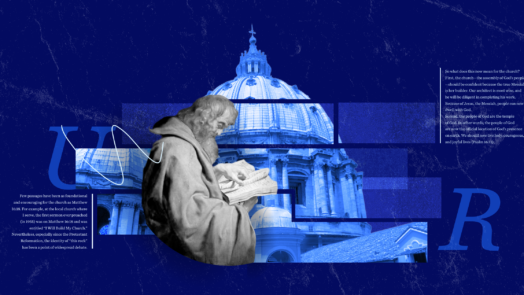
Jesus says to Peter in Matthew 16:18, You are Peter, and on this rock I will build my church and the gates of Hades will not overcome it. Few passages have been as foundational and encouraging for the church as Matthew 16:18. For example, at the...

 Thomas S. Kidd
In the years since the 2016 election of President Donald Trump, evangelicals have become arguably the most controversial religious group in America. Almost all mainstream news coverage of evangelicals relates to politics—or to scandals, such as the...

 Constantine Campbell
I like to say to students that, in ancient Greek, verbs are where the action is. It’s a tongue-in-cheek acknowledgement that, of course, verbs are doing words, but also that verbs are centrally significant for the way that ancient Greek functions...
 Kyle Hughes
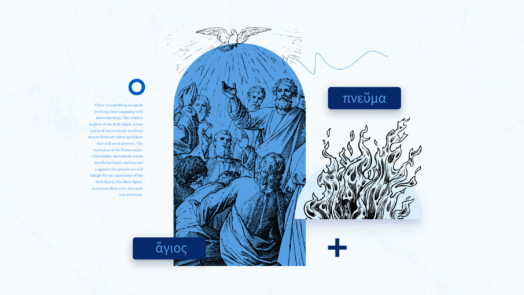
This article will provide a brief introduction to pneumatology by answering a few key questions: What do the biblical terms ruach and pneuma have to do with the Holy Spirit? How did early Christians go about the task of reflecting on the person and...

 Michael F. Bird
Revolutions are by their very nature destructive and disruptive. Revolutions bring old things down and erect new institutions and networks in their place. Revolutions bring conflict. They trample down things once thought sacred and raise up new...

All Christians must reckon with spiritual gifts in their Bibles. Lists in 1 Corinthins 12:7–10, 1 Corinthians 12:28, Romans 12:6–8, and 1 Peter 4:10–11 name various gifts while passages throughout the New Testament depict them at work. What are...
 JoAnna Hoyt
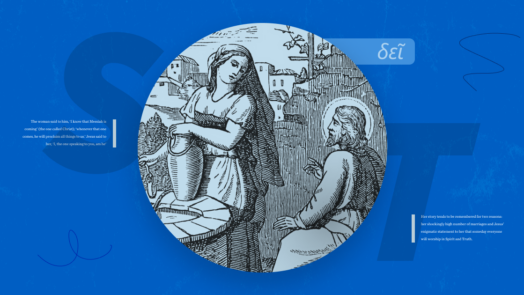
Saint Photini, so named in the Orthodox tradition, was an especially blessed woman. You may know her simply as “the woman at the well” from John 4. Her story tends to be remembered for two reasons: her shockingly high number of marriages, and Jesus’...

 Sam Waldron
I have watched with great interest, growing understanding, and deepening concern the debate between classical theism and—for lack of a better descriptor—Framean biblical personalism.

 Alexander Stewart
In Revelation 1:4–5, John gives what appears to be a Trinitarian greeting from God, the Spirit, and Jesus; but in place of the Spirit he highlights the “seven spirits before his throne.” John: To the seven churches in Asia. Grace and peace to you...

 Ruth Sutcliffe
Regarding the two “sides” in the fifth-century Christological controversies, R. V. Sellers observed, So intent was each upon securing for itself the victory, that it would not stop to enquire whether its opponents did not after all believe what they...
 Leopoldo Sánchez
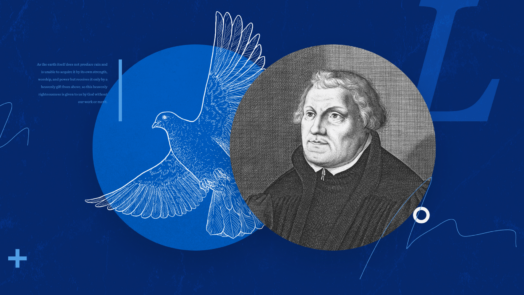
In her article, “The Holy Spirit: Lutheran Perspectives,” Cheryl Peterson observes that, due to their historic emphasis on the doctrine of justification by faith on account of Christ as the chief article of Christian teaching, Lutherans are...

 Veli-Matti Kärkkäinen
For a long time considered to be the stepchild—or, daringly, the Cinderella—of theology, the doctrine of the Holy Spirit (pneumatology) has in recent times risen to the center of attention. Never before in the history of Christian doctrine has there...

 Gregg Allison
Without the Holy Spirit and his mighty works, we would be missing absolutely everything. So, what are those mighty works? What does the Holy Spirit do?

 Gerald Bray
The Filioque clause in the Nicene Creed is the name given to an insertion that was made in the Latin version of the creed sometime in the late-sixth century, almost certainly in Spain. The creed itself was originally composed in Greek, most probably...
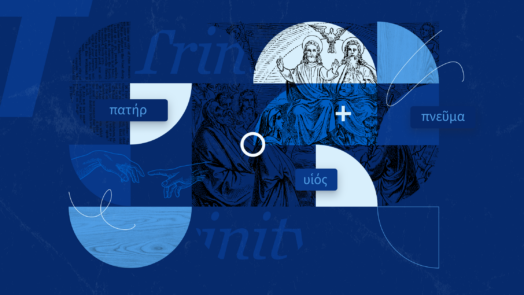
The elderly gentleman who confronted me after my adult catechesis class did not look particularly happy with me. He asked what I meant when I said the Trinity isn’t in the Bible, opening his well-worn King James Bible to 1 John 5:7–8 and stabbing a...

 Jordan Steffaniak
Sometimes theology can appear daunting. That is especially the case when it comes to the doctrine of the Trinity. Many of us—even those who have studied the Trinity for years—appeal far more often to mystery when it comes to knowing and delighting...

 Kevin Vanhoozer
Theological education forms students to become biblically, culturally, and doctrinally literate in order to live out their heavenly citizenship on earth. To succeed in this God-glorifying project, it takes not a village but a church—or rather...
 Nick Perez
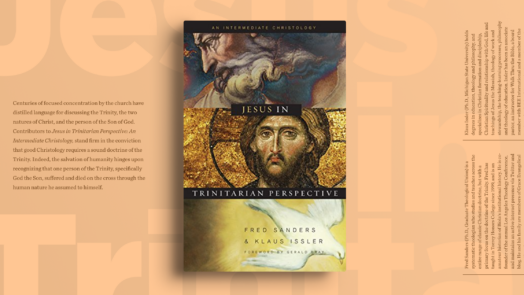
Centuries of focused concentration by the church have distilled language for discussing the Trinity, the two natures of Christ, and the person of the Son of God. Contributors to Jesus in Trinitarian Perspective: An Intermediate Christology, edited...

 Zac Hicks
A “doxology,” etymologically speaking, is “a word of glory.” It is an eruptive statement of praise to the God who is worthy of all glory-words, and more.
 Steve Walton
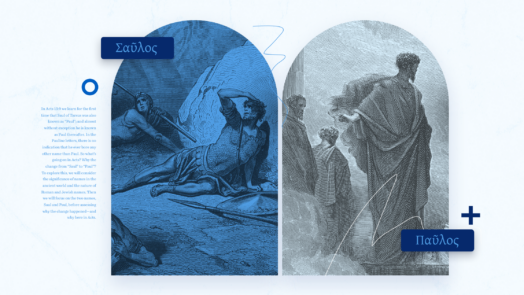
In Acts 13:9 we learn for the first time that Saul of Tarsus was also known as “Paul”; and almost without exception he is known as Paul thereafter. In the Pauline letters, there is no indication that he ever bore any other name than Paul. So what’s...

Is the Trinity a holy hierarchy, a triarchy, with God the Father as the boss, Jesus as his deputy, and the Holy Spirit as the Son’s assistant or delegate? The short answer is no. Historical Christianity—whether Catholic, Orthodox, or Protestant—has...

 Sean McGever
Artificial intelligence (AI) and technologies such as ChatGPT have forced educators to urgently confront difficult questions. Consider the following pedagogical concerns: Can these technologies be used effectively without compromising the...

 Joshua Jensen
My wife and I are missionaries in Cambodia, where I work as a Bible translation advisor for a local language, Jarai, and we both teach the Bible in various contexts. The Bible is important to us: not only how it is translated, but how it is used and...

 Jeanette Pifer
I have the privilege of teaching Greek. It’s one of my favorite classes to teach. But for many of my students, it is one of the hardest classes they take for their degree. Thus, one of my primary pedagogical goals is to instill a conviction in my...
 Logos Staff
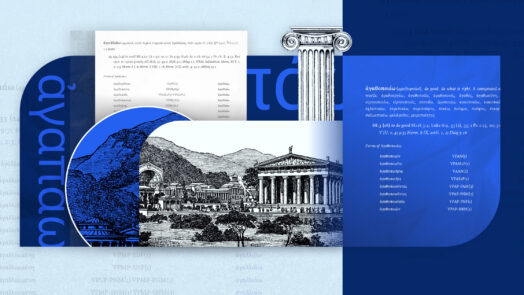
The most important lexicographer of the Greek of the New Testament had this to say about Greek lexicons: It is a mistake to shun the lexicon as a graveyard haunted by columns of semantic ghosts or simply fall back on it as on a codebook identifying...

 Kevin Grasso
This post will offer a fresh perspective on the grammar of a much-debated, and theologically loaded, verse in the Hebrew Bible: שְׁמַע יִשְׂרָאֵל יְהוָה אֱלֹהֵינוּ יְהוָה אֶחָד Listen, Israel! YHWH is our God. YHWH is the one. My interpretation is a...