

 Guest Author
This is a guest post by Peter Krol. A reader of my blog recently emailed to say, “I was never intentionally taught how to lead a Bible study, and, when the time came for me to teach others how to do it, I had no idea even where to begin.” Do you...

 Connie Champeon
My parents were Bible translators for an unreached people group in northern Brazil, and I was therefore blessed to watch the Word of God radically transform not just individual lives but a whole culture. The families in our area were desperately...
 Peter Krol
Did you know God encourages righteous protest? If he didn’t want to encourage it, he wouldn’t have given his people the vocabulary of protest in their songs and prayers. In the following study of Psalm 80, we will take a close look at one of the...
 Joshua Jensen
If you’ve ever heard evangelicals discuss English Bible translations, you might think they’re talking about Israelite spies, of whom we sing, “Ten were bad and two were good.” I’m not here to tell you which are which, but instead to explain the...

 Chris Date
“What does God say about hell?” asks Kris Brossett, kicking off his two-article series on the topic. Brossett proceeds to survey the three historic Christian views of hell—eternal torment, conditional immortality, and universalism—and commendably...

 Michael S. Heiser
What is the Septuagint? The Septuagint, of course, is the Greek translation of the Hebrew Old Testament. The Septuagint was the Old Testament of the early Greek-speaking Church, and it is by far the version of the Old Testament most frequently...
 William A. Ross
The Septuagint is a collection of ancient Greek texts produced by Jews between the third century BC and the second century AD. Most of those texts are translations of the books of the Hebrew Bible. But there are also numerous others now known as the...
 Mary Jahnke
“Reading the Bible isn’t the same as studying the Bible.” I remember learning that as a kid, sitting in the far-left row of Mrs. Bucy’s Sunday school class. Back then, Bible study tools were printed Bibles, bulky concordances (and even bulkier...

 David Schreiner
When studying Scripture, there are certain things that we must always consider, including history, language, culture, and literature. However, if you’ve traveled to Israel, you may have realized how geography can be another important consideration...

 Randy A. Brown
Following the pandemic in 2020, videochat has become a popular platform for group Bible study. Though we’re well into the videochat era by now, it’s not too late to pick up some tips that will help you have an effective small-group Bible study...
Luke wrote his Gospel so his reader could have certainty regarding the things he had been taught about Christianity (Luke 1:4). He opens with narratives to explain Jesus’s credentials (1:1–4:13) and fundamentals (4:14–9:50). The lengthy travel...

 Logos Staff
Hebrew lexicons are basically dictionaries for the study of individual words in ancient biblical Hebrew. They are essential tools for scholars, pastors, and students studying biblical Hebrew to help decipher Hebrew text not discernable without a...

Philo was a first-century Jewish philosopher best known for blending Jewish monotheism with Stoic thought by interpreting Scripture through an allegorical lens. He is one of the major figures of ancient philosophy, yet one of the least studied.Philo...

 Bible Study Magazine
Can we learn how to pray like Jesus? We know he prayed in the wilderness and in the garden of Gethsemane. We hear snippets of his conversation with the Father in John 11 when he raised Lazarus from the dead and in Luke 23 when he hung from the cross...

Dr. Michael Heiser discusses the topic of Bible translations (0:10), and Joshua Jipp talks about the importance of being part of a spiritual community (3:37). Learn to use biblical Greek and Hebrew Whether you want to learn Greek and Hebrew for the...

Dr. Steve Runge discusses verses like Romans 8:28 that create challenges for Bible translators (:10), and get an animated look at Psalm 36:5–9 (2:50). Get more insight into Romans with High Definition Commentary: Romans If you want more of Dr...

See why Bible scholar Mark Futato says it’s important to study Hebrew (0:10), and Dr. Carl Sanders explains what evangelical theology is (4:10). Start learning Biblical Hebrew with Dr. Futato With this bundle, you’ll gain insight into...

John Walton explains the interaction between God’s world and God’s Word (0:10), followed by an animated video highlighting why the cultural context of Scripture matters to modern readers (5:10). Study the culture and context of the Old Testament To...
 John D. Barry
Context is king, as they say. But when it comes to studying the Bible, context is far and wide. A verse is contextualized in a passage; a passage in a biblical book; a biblical book in a particular place and time; and each time and place is...

 Karen Engle
When coronavirus hit, churches scrambled. Those that weren’t online figured out solutions fast, and those that already were online embraced remote church as a new normal. Since then, churches have worked tirelessly to ensure their congregations can...

Paul David Tripp says justice “is close to the heart of our Savior-King.” The concept permeates the Bible, verses about justice appearing as early as Genesis and culminating with God’s “true and just judgments” in Revelation that lead to the wedding...
When you think about helping people grow spiritually, Bible engagement and discipleship are probably at the top of your list. What if your congregation engaged with the Bible in meaningful ways every day?
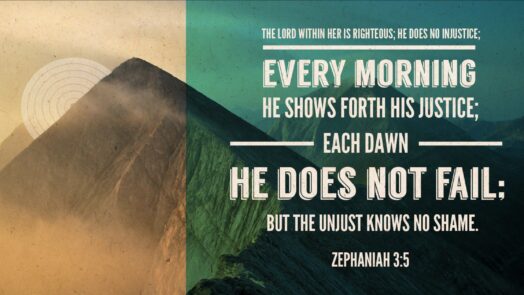
God’s view of injustice is clear: he hates and renounces it because injustice perverts his world. Yet injustice—the unjustified ill-treatment of others through false accusations or unnecessarily inflicting pain or punishment—can be found in almost...

In the Bible, dreams are sources of divine revelation that indicate what someone should do, reveal what is going to happen, or explain current events. The Bible uses different Hebrew and Greek words when it talks about dreams and visions...
Dr. Craig Evans explains the difference in how the original audiences of Scripture read the texts (:10), and Dr. Mike Heiser talks about the significance of reading ancient texts that the biblical authors read as well. Study the world of Jesus and...

Dr. John Scwhandt discusses the benefits of studying Greek (0:10), and a Logos Pro Tip about studying the Dead Sea Scrolls (4:00). Study Greek with Dr. John Schwandt For serious theological study, you need to be able to recognize the original words...
Scholar George Guthrie discusses how understanding the structure of Hebrews helps us interpret it (0:10), and a pro-tip on setting multiple service times in Proclaim (5:05). Study Hebrews with Dr. Guthrie This course is the culmination of over 20...

Writing a paper on a biblical word can feel overwhelming at first, but it doesn’t have to. We’ve outlined essential steps for writing a paper that demonstrates a sophisticated understanding of a Greek or Hebrew word—and its significance for biblical...

Dr. Steve Runge teaches about delay in the Bible (0:10), and Todd Bishop shows how to use the Psalms Explorer tool in Logos (2:15). Keep learning how language works with Dr. Runge Our understanding of the Greek New Testament is based almost entirely...
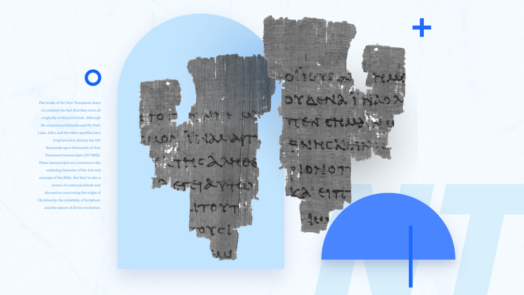
The books of the New Testament share in common the fact that they were all originally written in Greek. Although the original parchments used by Paul, Luke, John, and the other apostles have long been lost, history has left thousands upon thousands...