

 Randy Leedy
Image: codex-sinaiticus.net By Randy Leedy, PhD Many Christians are troubled by textual variants, or the differences in biblical manuscripts. The Bible has scribal errors in it? Then how can I be sure what I’m reading is God’s word? I have...

 Bible Study Magazine
Many of the 150 canonical psalms have superscriptions or titles, like: “Of David,” “For the choirmaster,” and “According to the lilies.” Are these superscriptions in the psalms original? Or were they added at a later time? In this excerpt...

 Michael S. Heiser
We all have watershed moments in life, critical turning points where, from that moment on, nothing will ever be the same. One such moment in my own life came when I rediscovered the word elohim. It was in church on a Sunday morning while still in...

 Didaktikos
COMMUNITY, CULTURE, AND THE QUEST FOR DISCOVERY A Conversation with Robert W. Yarbrough From lumberjack to professor may not be the most obvious career change, but for Robert W. Yarbrough, both represent hard labor. During his thirty-six years of...

 Karen Engle
Explore the disagreement that exists among evangelicals concerning the inerrancy of Scripture.

 Guest Author
Grant Fishbook started preaching full time in 2003, but every few years, he’d discover that he wasn’t connecting with the modern audience. At first, he thought maybe he was the problem—maybe he wasn’t doing something right, or maybe he...

 Lexham Press
In this excerpt adapted from the course Church Leadership and Strategy for the Care of Souls, by Harold L. Senkbeil and Dr. Lucas Woodford, Senkbeil explores the two stages of pastoral burnout—what he calls “pastoral depletion syndrome”—and how to...

The beauty of sermon writing is that there’s no set methodology. True, many pastors use similar tried-and-true techniques, but ultimately, the process is unique to each pastor. Some preachers start the process at the beginning of the week and tackle...

 Logos Staff
Exegesis is the most comprehensive form of Bible study. It gathers together nearly every Bible study task—word studies, translation comparison, research, and more—for a thorough examination of a biblical passage. While there is no singular process...

 Mark Ward
I was absolutely shocked. At the top of my NT Introduction paper on Jewish Institutions of New Testament Times was a “B+”—but that wasn’t the shocker. I was only just starting seminary, and I didn’t have the hang of things yet. What shocked me was...
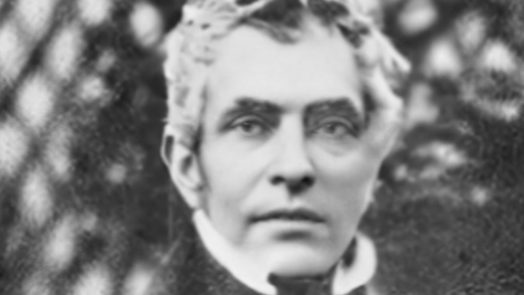
Dispensationalism is a theological system for interpreting the Bible that views the history of God’s engagement with humanity as divisible into typically seven distinct periods. The system relies upon a literal hermeneutic and the recognition of...

The bivocational pastor is one of the most unique, gifted, and selfless individuals in the Church. That’s because they serve churches that can’t compensate them with full-time pay (or they choose to stay in another job to save the church money)...

At the beginning of The New Testament in Its World, authors N. T. Wright and Michael F. Bird ask this question: “How does God’s great drama work, and what part are we called to play in it?” Wright and Bird answer their own question: You’ll only...

 Tavis Bohlinger
In the following interview, Jacob Cerone discusses his recent translation of Adolf von Harnack’s work on 1 Clement. This book is an invaluable addition to Early Church studies as well as another window into the scholarship and teaching of...

This is a guest post by Peter Krol. A reader of my blog recently emailed to say, “I was never intentionally taught how to lead a Bible study, and, when the time came for me to teach others how to do it, I had no idea even where to begin.” Do you...

Evangelical theologian and apologist Norman Geisler has been one of the most prolific and influential voices in apologetics. For more than 40 years, the internationally known author, speaker, and debater has studied and defended the faith. Geisler...
 William A. Ross
William A. Ross, assistant professor at Reformed Theological Seminary, explores a recent Dead Sea Scrolls discovery of a few dozen Bible manuscript fragments in Israel and how it may shed new light on Septuagint studies.

At times, the God-given task of family discipleship can seem too heavy to bear—yet it’s a parent’s highest priority. And fortunately, we are not alone in the task. Jesus promised never to leave or forsake us (Heb 13:5), and if he has tasked us with...

Peter J. Leithart explores the meaning of baptism and how those baptized form a beautiful picture of Jesus and a “present-tense” sign of the gospel.
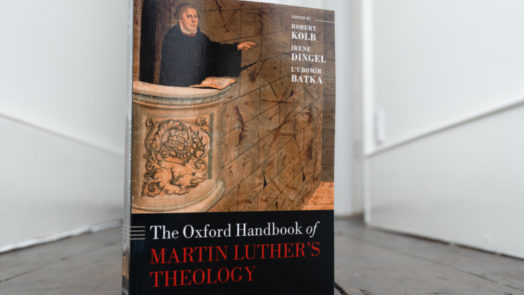
The fourth interview in our series on the OUP Handbooks is with Robert Kolb, Professor Emeritus of Systematic Theology at Concordia Seminary, St. Louis, editor of The Oxford Handbook of Martin Luther’s Theology. The LAB sat down (virtually) with...

What is the Septuagint? The Septuagint, of course, is the Greek translation of the Hebrew Old Testament. The Septuagint was the Old Testament of the early Greek-speaking Church, and it is by far the version of the Old Testament most frequently...

 Jennifer Grisham
Since the first century, women have been active in the theology and mission of the Church. Luke–Acts reveals how Jesus and the apostles cared for women and enlisted them in kingdom service, and John contains the astonishing tale of how Jesus carried...
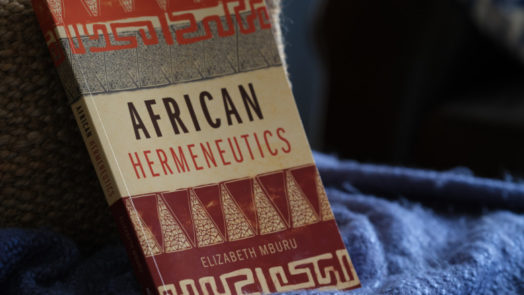
"If we truly believe that the church is one body, then we ought to be aware of what is happening in the rest of the world. After all, our scholarship ought to serve the Church and society. This is the concept of unity in diversity and the...

 Daniel Motley
How should Christians relate to the Old Testament Law? Ever since Paul addressed this issue in his epistles, theologians have agreed that our relationship to the Law has changed on account of the death of Christ. But grasping the exact nature of...

"Grudem’s new chapter deserves a full response, and particularly one which presses in on the coherence of his affirmation of eternal generation with his reaffirmation of eternal functional subordination and with his view of the divine will"

 David Schreiner
When studying Scripture, there are certain things that we must always consider, including history, language, culture, and literature. However, if you’ve traveled to Israel, you may have realized how geography can be another important consideration...

Knowing biblical Hebrew enables you to engage deeply and richly with the Old Testament in its original language. But because the Bible is a decidedly Jewish book, and the authors of both testaments were all Jews familiar with the Hebrew language and...

Hebrew lexicons are basically dictionaries for the study of individual words in ancient biblical Hebrew. They are essential tools for scholars, pastors, and students studying biblical Hebrew to help decipher Hebrew text not discernable without a...
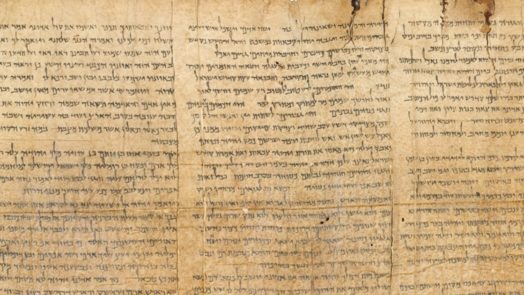
The Old Testament text that we have today in our various Bible translations is based upon ancient manuscripts that date from as early as 200 BC up to the Medieval Age. The Old Testament manuscripts (OT MSS) that we have access to today include...

"Reading the Bible in the original languages causes us to be more thoughtful and careful about the actual wording of the text." -- Robert Plummer