
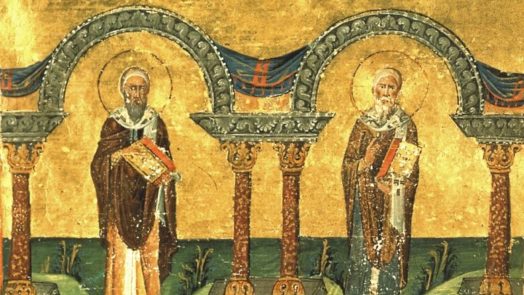
 Calvin Goligher
"Reading Cyril has helped me to see . . . that the heart of our faith is a person."
 Guest Author
"In studying the Bible, a big part of our goal is to understand the text in its original historical and cultural context. This means we have the difficult responsibility of trying to read God’s Word with “Middle Eastern eyes” instead of our innate...

 Daniel K. Eng
"Mounce is to be commended for producing a quality seminal grammar, and this latest edition is a worthy upgrade."
 jonathanhomrighausen
"One of the key elements for teaching any language is culture. . . . Yet in teaching biblical languages we sometimes forget this."

"Bernard’s brilliance is not his use of so-called critical methods but in the fact that, as a monk, he had prayed, read and studied the Sacred Scriptures so intently that his vocabulary is literally a biblical vocabulary."
One of my warmest memories with Professor Hurtado occurred in 2014 at SBL in San Diego over a meal. We went to lunch at a French café and before we began eating, he paused and said: “Let’s pray over our meal.” He thanked God for the meal, closing...
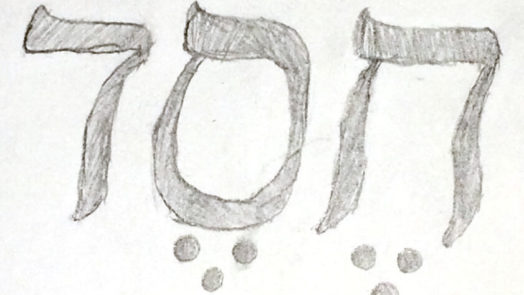
In 2017, David Pleins and I released a new resource designed for students of biblical Hebrew: Biblical Hebrew Vocabulary by Conceptual Categories: A Student’s Guide to Nouns in the Old Testament, a user-friendly book from Zondervan that...
 Tavis Bohlinger
"The impression we want to create is that Jesus is the reason why we have a New Testament. Jesus is the momentum, the event, the power, and explanation for why Christianity began"
In 2017, David Pleins and I released a new resource designed for students of Biblical Hebrew: Biblical Hebrew Vocabulary by Conceptual Categories: A Student’s Guide to Nouns in the Old Testament (Zondervan, 2017), a user-friendly book from Zondervan...
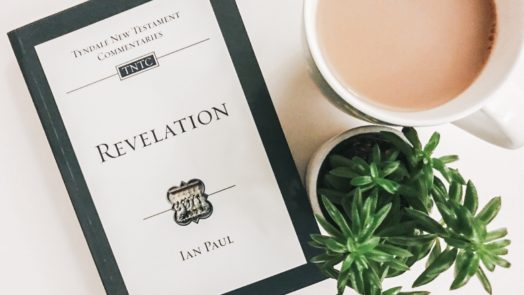
"To spend such an extended time immersed so deeply in a text of Scripture was a wonderful experience, and a number of my writing weeks offered me a profound sense of being in the presence of God."
 Nijay Gupta
Nijay Gupta shares his final post in this helpful series on best commentaries by listing two essential works on Philemon. Here I will comment briefly on Philemon. For an excellent, up-to-date technical commentary, check out Scot McKnight (NICNT)...

"At some point in his decades of teaching Biblical Hebrew, David Pleins realized there was a gap in his students’ education."
 Michael F. Bird
The information age is changing how we deliver teaching and learning in seminary education. Accordingly, our pedagogy needs to catch up with the technology and the needs of our students. My mind changed on this very slowly and very reluctantly, but...
The Pastoral Epistles have long been regarded as wise instruction for the benefit of the church. But in the last two centuries these texts have often been sidelined in the academy due to suspicions of pseudepigraphal (false) authorship and seemingly...
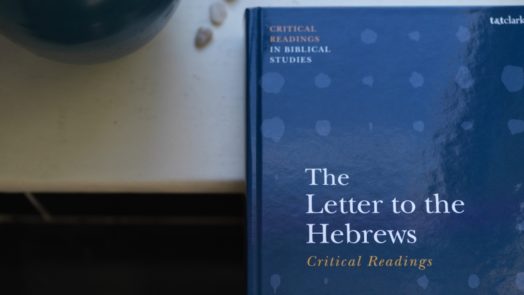
In the following interview, Scott Mackie speaks about his recent publication with T&T Clark, The Letter to the Hebrews: Critical Readings (T&T Clark Critical Readings in Biblical Studies; London: Bloomsbury, 2018). Scott is a passionate and...
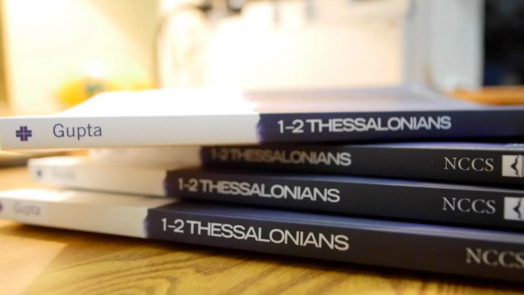
Several excellent commentaries on the Thessalonian letters have been produced over the years, but the last decade has seen a notable surge of strong scholarship on these texts.
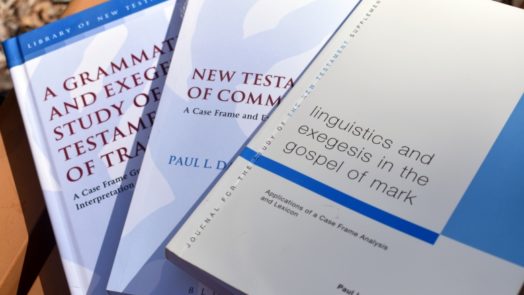
 Brent Niedergall
What if there was a lexicon that required less art and more science?
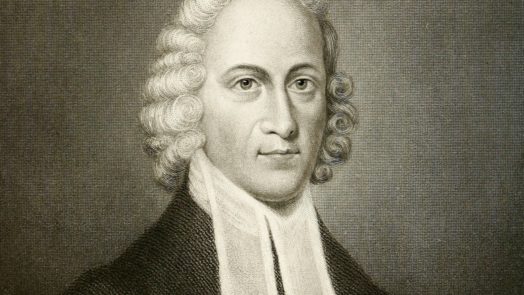
For all the help that Edwards has given scholars and pastors in the areas of theology, philosophy, and missions, it is probably due time that someone devote a doctoral project to Edwards’ organizational genius.
Colossians is an underappreciated jewel in the Pauline corpus, often sidelined from academic conversations because of its debated authorship. It is a beautifully-crafted meditation on the cosmic-and-crucified Christ.
Master Journal Bundle 3.1 gives you affordable, digital access to current conversation in theological scholarship.
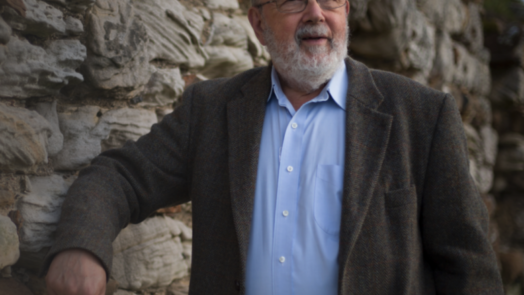
This is the book every scholar, pastor, and lay theologian will be referencing for years to come.
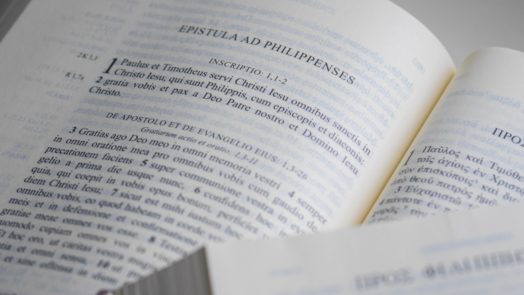
This short Pauline epistle has long fascinated scholars, especially the so-called “Christ Hymn” (2:6-11), offering the possibility that Paul embedded here a piece of liturgy or tradition from earliest Christianity (or Paul proves himself here a poet...
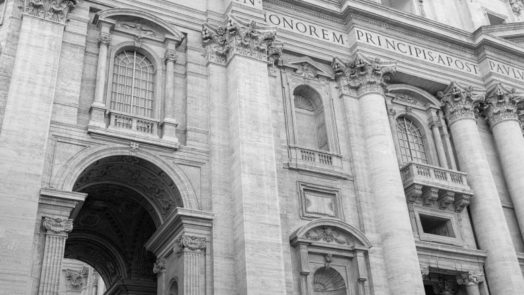
We met the Pope and gave him Verbum. You can get the same Biblicum package as him.
This is the most thought-provoking book I have read in a long time . . . none of the weak portions undermine his general thesis that the supernatural personages envisioned in the OT are both central and coherent in the text.
 Didaktikos
Inviting Students to Confront Their Misrepresentations About Jesus Michael Kibbe | Great Northern University “The Gospel of Mark can be summed up in two words: Rome wins.” I speak these words about sixty minutes into my first hermeneutics session of...

What you need is a system that allows you to take notes easily (one that is not clunky); allows you to use your notes for drafting essays (one that allows you to find and search easily); and one that protects you from plagiarism, both now and for...
Ephesians is widely considered one of the most beautifully composed texts of the New Testament. And yet, because some scholars argue that Paul did not write the letter, it is often left out of academic conversations about Paul, his ministry, and his...

Here’s an opportunity to expand your library that you won’t want to miss: a superb set of OT resources from T&T Clark/Bloomsbury, The Library of Hebrew Bible/Old Testament Studies: 2016 (25 vols.), is currently on pre-order. But why...
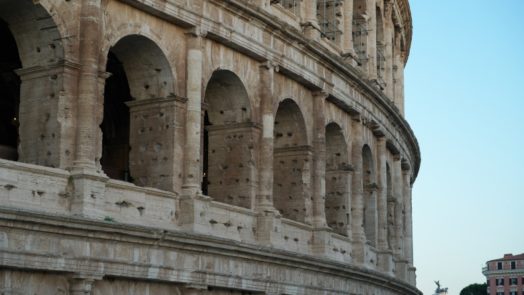
If you missed ISBL in Rome this year, then we offer you here a sense of the importance of the event and the grandeur of the city through the following photoessay.
Like Romans, Galatians has been at the center of theological debate concerning Paul’s theology. At the heart of the issue is Paul’s view of the Law. Thankfully, several excellent commentaries are available, a few written in the last year or two...