

 Graham Cole
The following is a short excerpt from the already short What Is the Bible? by Graham Cole—one of 17 short books on many current topics in the Questions for Restless Minds series, edited by D.A. Carson. In it, Cole describes the way two different men...

 Logos Staff
Learn what the word “revelation” means, what the number 666 might be, approaches to interpreting the book of Revelation—and more.

 Katie French
When his childhood dream of being a major league baseball player bit bitter dust, Jim Hamilton realized he’d have to pick another career. He found a new passion: biblical theology, a passion that took off during his studies at The Southern Baptist...

Charles Spurgeon once wrote, “I cannot tell you how much I owe to the solemn words of my good mother.” Countless people could say the same thing, and Mother’s Day is set aside to express extra gratitude. Reflect on honoring mothers, the...
 Jennifer Lucy Tyler
What you’ll see in this Logos Live episode Jennifer Grisham interviews Logos national presenter, founder of Soul Circle Ministries, and ambassador for International Justice Mission Jennifer Lucy Tyler. Hear what stirred Tyler’s hunger...

Our political leaders need prayer, no matter who they are. And as Paul exhorted Timothy, Christians are called to pray for those “in high positions.” As we go about everyday life, the realm of politics often seems so far removed. Or, to be honest...
 Mark Ward
Today is Good Friday, and Christians around the world are remembering Christ’s death, caused by our sin. This year on the blog, we featured a five-week family Easter Bible study written especially for families. We posted one Easter Bible Study each...

 Mary Jahnke
Every month, around 350 people search for “Bible reading plans PDF.” Nearly 12,000 people on average (and as many as 30,000!) search for “Bible reading plans” monthly. Here’s a great (free) option for every one of those people—and you too. Here’s...
We’re entering the Easter season, and Christians around the world are remembering Christ’s death, caused by our sin. But we are also celebrating, because Resurrection Day is our God-given promise that we, too, will one day rise. This year on the...

This year on the blog, we’re featuring a five-week family Easter Bible study written especially for families. We’re posting one study a week every Friday leading up to Easter. It’s an excellent opportunity for your family to remember the story the...
 Kirk E. Miller
One of the privileges I have as a pastor is getting to meet new people almost weekly. When we meet someone new, like when folks visit my church, there’s a set of questions we typically ask: What’s your name? Where are you from? What do you do? These...

We’re entering the Easter season, and Christians around the world are remembering Christ’s death, caused by our sin. But we are also celebrating, because Resurrection Day is our God-given promise that we, too, will one day rise. This year on the...
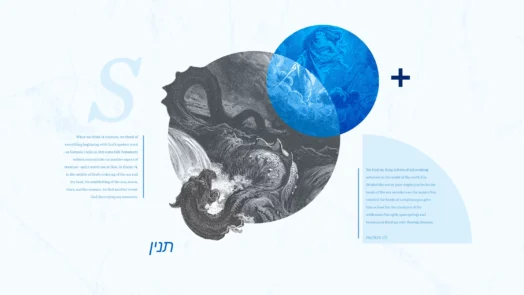
 Michael S. Heiser
Does the Bible talk about sea monsters? Are they literal? In this excerpt about sea monsters in the Bible from his book I Dare You Not to Bore Me with the Bible, Dr. Michael Heiser explores the mention of “sea monsters,”...

Who are Gog and Magog, and where are they located? Explore various geographical and spiritual interpretations.

Learning New Testament Greek is a fantastic idea—and perhaps an intimidating one. I don’t want to add to the difficulty. And I also kind of do. I have a suggestion that will help you in the long run: try learning about language more generally before...
Not long ago, the Dead Sea Scrolls were locked away in places where only a select few scholars could see them. That situation actually lasted for decades. The deep end Now, you can see the scrolls for yourself with all the helps you’re accustomed to...

Confidently. That’s the answer. If you’re going to get it wrong, along with Luther I say, Sin boldly. But that’s just it: when it comes to Bible words, there are fewer pronunciation sins than you think. Now… there are some. I was just listening to a...
 Bible Study Magazine
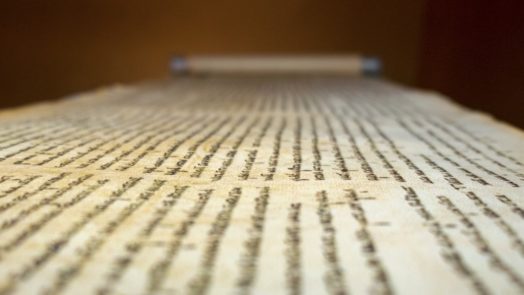
The Dead Sea Scrolls have impacted our understanding of the history of the biblical text—learn how in this article by Jeremy D. Lyon.
 John D. Meade
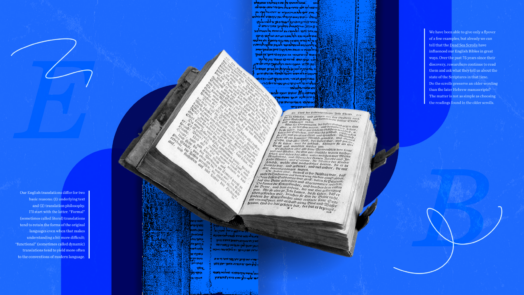
Our English translations differ for two basic reasons: (1) underlying text and (2) translation philosophy. I’ll start with the latter. “Formal” (sometimes called literal) translations tend to retain the forms of the original languages even when that...

 Karen Engle
If you’re like me, you probably set out each new year with lofty Bible study goals. And then, well—life happens. A few random distractions can quickly turn much-intended goals into a nice idea shelved for next year.

 Zach Hollifield
Almost a year to the day after becoming a Christian, I fell to a familiar sin that had ruled me prior to conversion. At that moment God’s presence vanished. I was left wondering if I had lost my salvation—if I had been saved in the first place. The...

Sometimes, it can feel like you need a seminary education to dig deep in the Word. But, thankfully, there’s an easier (and much cheaper) way. With Logos Bible Software, you can study the Bible in-depth without getting overwhelmed because...

A while back I was working on a project, and I needed help. I was looking for insights Bible readers have gained into Scripture by comparing English Bible translations. The lone rule was that you couldn’t know Greek or Hebrew. I mentioned this...

Bible commentaries are one of the best ways to dive into the details of Scripture. But maybe you’ve been intimidated by the sheer number of sizes of commentaries (some are over a thousand pages). We’ve broken down the different kinds of commentaries...
Lots of people want their Bible translations to be “literal.” But what does “literal” even mean? The NASB has called itself “the most literal” English Bible. The CSB calls itself “highly literal.” My own church’s ESV is “essentially literal.” The...
Bible study can be as addictive as eating Fritos: “You can never eat one. You can eat a half a bag, but not one.” That’s what Chuck Swindoll, one of the best Bible teachers, says. But for many Christians, reading the Bible feels like eating...

 Joel Arnold
Some learning curves are difficult to climb because the concepts involved run against the grain of the human mind (for some people, math). Sometimes there’s the challenge of where to start with intertwined concepts woven in a thick web, such as in...
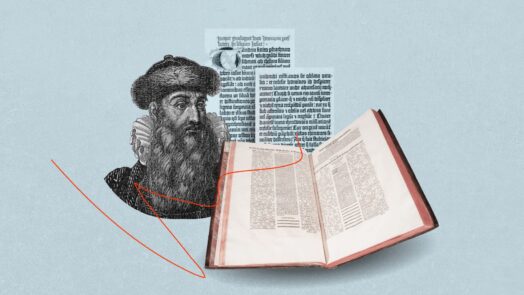
A quiet revolution, a renaissance, has gone on in Bible design in the last decade or so. Have you noticed? It used to be that nearly everyone at my church had a Bible that looked like this, and hardly anyone seemed to mind. But ask yourself a few...
In this “Word Nerd: Language and the Bible” video on the word Jehovah in the Bible (full transcription below), Mark Ward (author of Authorized: The Use and Misuse of the King James Bible) explores why God’s name is not Jehovah—and two excellent...

 David P. Barshinger
Ephesians 5 is both celebrated as a beautiful picture of the husband-wife relationship and debated for its calls of submission. John Chrysostom (347–407)—the “golden-mouthed” preacher, as he came to be known—sought to illuminate the teachings of...