

 Alastair Roberts
To many, an emphasis on liturgy might seem to be more of a liability than a support for ethics. Admittedly, the relationship between liturgy and ethics can easily be framed negatively. Citing passages from the prophets such as Amos 5 or Isaiah 1...
 Kirk E. Miller
How should we understand the Bible’s Creation story in Genesis 1? In this episode of What in the Word?, Kirk E. Miller is joined by Vern Poythress to explore the genre, interpretation, and theological intent of Genesis 1:1–2:3. They discuss various...

 Wyatt Graham
Nestorianism is an ancient heresy that speaks about Christ as if he is two persons instead of one, that is, the one Lord Jesus Christ. The flashpoint in the debate over Nestorianism was Nestorius’s denial that mary bore God in her womb and thus was...

 Sandra Glahn
Our Christianity is rooted in our physicality. The first chapters of Genesis describes God creating matter and calling it good, followed by God creating male and female bodies and calling them very good. The incarnation of Jesus adds special dignity...

 Ewan Goligher
Physician-assisted death is a profoundly weighty matter, for it raises timeless questions about the meaning and value of our lives, the problem of suffering, and the possibility and nature of human existence beyond the grave. At bottom, the question...
 Joe Heschmeyer
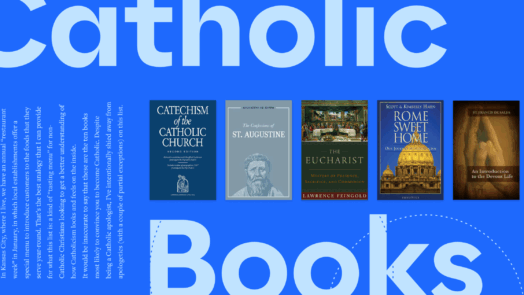
In Kansas City, where I live, we have an annual restaurant week in January, in which local establishments offer a special menu to introduce customers to the foods that they serve year-round. That’s the best analogy that I can provide for what this...

 Karen Engle
Finding appropriate Mother’s Day sermon ideas isn’t always easy. Let’s face it—Mother’s Day can be a tricky day to preach on. The pastor-preacher has to stand in front of a congregation and find something special to say to connect with the hearts of...
In this episode of What in the Word?, Malcolm Foley joins Kirk E. Miller to discuss the challenging passage of 1 Timothy 6. Together, they unpack Paul’s warnings about the desire for wealth and consider how the love of money is described as a root...
 Matt Barrios
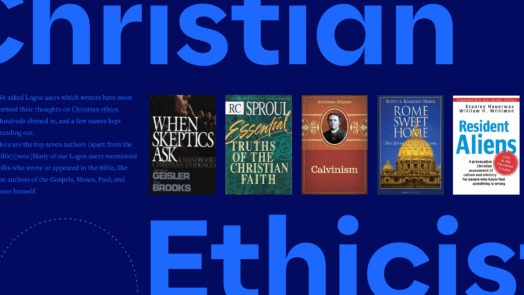
We asked Logos users which writers have most formed their thoughts on Christian ethics. Hundreds chimed in, and a few names kept standing out. Here are the top seven authors (apart from the Bible) on Christian ethics according to Logos users. Plus...

 Daniel Viezbicke
A succulent sits on my desk at church. I bought it years ago because I wanted something to break up the monotony of my office, as well as something to symbolize my ambitions in pastoral ministry. Crassula ovata—so my horticulturalist wife told...
 Mark Ward
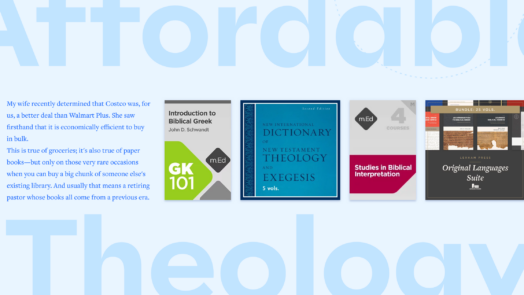
My wife recently determined that Costco was, for us, a better deal than Walmart Plus. She saw firsthand that it is economically efficient to buy in bulk. This is true of groceries. It’s also true of paper books—but only on those very rare...
Is Jesus really less than the Father? In this What in the Word? episode, Kirk E. Miller is joined by theologian Michael Horton to tackle John 14:28. Together, Kirk and Mike explore multiple historical interpretations, including Arianism, eternal...
 Chris Green
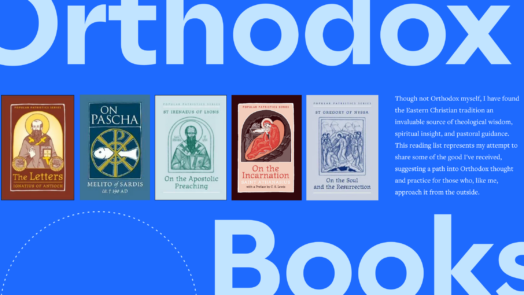
Though not Orthodox myself, I have found the Eastern Christian tradition an invaluable source of theological wisdom, spiritual insight, and pastoral guidance. This reading list represents my attempt to share some of the good I’ve received...

 Glenn Butner
Christian ethics is the discipline that aids the church in pursuing the example of Christ in wisdom, holiness, and justice as empowered by the Holy Spirit and directed by Scripture. What is Christian ethics? We will answer that by introducing basic...

 Michael F. Bird
I will never forget 2004, the year when Mel Gibson’s The Passion of the Christ came out at the cinemas. Before its release, Jewish groups protested the film on the grounds that it would contain anti-Semitism and amplify anti-Jewish rhetoric from the...

 Charlie Trimm
What does the Bible say about immigrants? What does it mean to be a sojourner? What are the most important verses on this topic?
Does Romans 7 describe the experience of a believer struggling with sin, or is Paul referring to something else entirely? Many in Protestant traditions assume that Paul’s use of the first-person pronoun in this passage reflects the believer’s...
 Phillip Cary
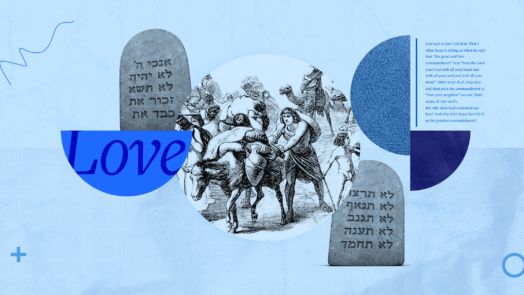
God says to put God first. He also tells us to love our neighbor. But why does God command us to love him? And why does Jesus identify it as the greatest commandment?
The end of 1 Peter 3 presents one of the most challenging passages in all of the New Testament. What does it mean that Jesus preached to the spirits in prison? Did he descend into hell? Was he speaking through Noah in the past, offering the deceased...

We love getting your feedback about how Logos can help you get one step deeper into God's Word. After listening to your input and engineering some grade-A solutions (if we may humbly say so), we're delighted to introduce version 41!

 Rebekah Eklund
For me, the most challenging command Jesus ever gave is to love my enemies. What does it mean to love? Who is an enemy? Why did Jesus command his followers to love their enemies, and what does that actually look like in action?
 Tom McCall
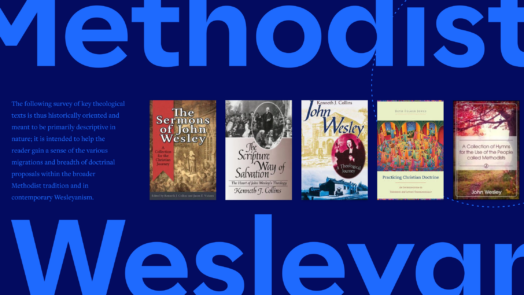
Terms like Wesleyan theology and Methodist doctrine are used in a variety of contexts and can mean a lot of different things. And for good reason. The past several centuries have been the scene of many shifts and much shaking in theology among...

 Gayle Doornbos
In Jeremiah, the people of God in exile in Babylon are commanded to pray for the city and to seek the peace and prosperity of the city by building houses, planting gardens, and getting married. The exiles are called to not merely pray for the city...
What does Paul mean when he says that all Israel will be saved in Romans 11? Does this refer to a restoration of the nation of Israel, the salvation of the church or something else? In this episode of What in the Word, Richard Lucas and Kirk Miller...

The internet has questions about the creation mandate. I have answers. And when I don’t, I’ll tell you straightforwardly. The creation mandate is God’s original marching orders to mankind. But it is also the original divine blessing that has brought...

 Guy Waters
One of the best known and most comforting statements of Jesus is also one of his most enigmatic. What is it that Jesus holds out? Why do people need to receive what he offers? What incentives does he give to us to receive it?
In the Olivet Discourse, Jesus states that he does not know the day or hour of his return—only the Father does. But how can that be? If Jesus is fully God, wouldn’t he be omniscient? In this episode of What in the Word?, Kirk E. Miller is joined by...

Many people view work as either a means to success or a necessary burden. But how should Christians think about work theologically? In this episode of Logos Live, Kirk E. Miller talks with Karen Swallow Prior about the theological view of work...

 Christopher Kou
It’s Monday. You wake up to another week. Yesterday was Sunday, but you missed church again for a pressing work project. Maybe on break you caught a recorded sermon, which you now find difficult to remember. At least you got in some football viewing...

 Casey Bedell
It is often assumed that Christianity grew and maturated in the ancient world because the gospel fit its sense of enchantment. So many have proposed that we need to re-enchant that which has been disenchanted. One aspect of enchantment evidently...