
 Mark Brians
Unless we draw our concepts from Scripture, we are prone to miss what Paul means when he tells the Church of Corinth that “the foolishness of God is wiser than human wisdom” (1 Cor 1:25).1 If we fail to ground our understanding of wisdom and folly in the story of the Bible, we are likely to draw them instead from the definitions and currents that are salient in contemporary culture.
On the one hand, popular culture often associates “wisdom” with cunning and probabilistic decision-making. Living in the “age of algorithms,” we are tempted to define wisdom in these terms. On the other hand, wearied by the determinism of algorithmic governance, there is a simultaneous cultural urge to abandon all premeditation and wise, calculated decision-making. This opposite side of the modern impulse to “hedge your bets” is found in attitudes like YOLO (“You Only Live Once”), “Send it!” and perpetually “swiping left” until the advanced learning computation spits out the perfect possible future for you to actualize. Thus, when us moderns hear “foolishness,” we are prone to think of a youthful and heedless abandon. When the Bible speaks of “wisdom,” we are prone to assume the kind of logical, infinitely ramifying decision-making processes that are at work today in everything from smartphones to geopolitics.
Despite their apparent opposition, both of these modern tendencies stem from a very recent and strange shift in our understanding of the act of deliberation. Paul Scherz summarizes the condition this way: “The whole of political policymaking and even personal decision-making are now being forced into the form of a gamble on probabilities.”2 While the algorithmic–probabilistic mode of deliberation seems like less of a gamble than the “You Only Live Once” mode of decision-making, it still is, ultimately, a kind of wage placed on speculative options. Thus, Scherz suggests, we live in an era in which “To be rational now means to gamble.”3
But the Bible does not talk about wisdom this way, as a kind of gamble. Rather, biblical wisdom is about walking in the way of the Lord.
Table of contents
The beginning and nature of wisdom
The Scriptures abound with the invitation to wisdom. Proverbs personifies Wisdom as a great lady crying out, welcoming, beseeching:
To you, O people, I call,
and my cry is to the children of humankind.
Learn prudence, O simple ones;
fools, learn intelligence. (Prov 8:4–5)
More than an inert intellectual object, a “correct answer,” wisdom in the Bible is akin to a hostess who gathers and welcomes the world into the bounty of her hospitality. At her table, she lays choice fruit: understanding, discernment, good decision-making, and a cornucopia of prudent choices. Wisdom is a feast, not an answer key.
It is not merely the case that God is wise, it is more accurate to say that God is Wisdom itself. So humans are wise as they grow closer to God and walk in his ways, not only informed by his Word, but conformed to his person. “The start of wisdom is fear of Yahweh, and knowledge of the Holy One, insight” (Prov 9:10).
A central part of wisdom according to the Bible is its estimative or evaluative role—its role in judging and distinguishing between good and evil. In the beginning, God, in perfect wisdom, created the whole cosmos (Prov 3:19–20) and at each stage of creation declares the works of his hands “good” (Gen 1:1, 4, 10b, 12b, 18b, 21b, 25b, 31). God’s evaluating, adjudicating, and declaration of “good” and “very good” are displays of his wisdom.
Adam and Eve, created in the image of God, were intended to grow in maturity and glory, to grow in wisdom and understanding. Humanity was never supposed to exercise its dominion over the world (Gen 1:26) apart from walking in the knowledge, piety, and wisdom of God. This is why some Christians have understood the prohibition against eating from the Tree of the Knowledge of Good and Evil as only temporary and not eternal.4 Like Laban (Gen 28:13) or David (2 Sam 14:17) or Solomon (1 Kgs 3:9), humans were created to discern between good and evil. This is in fact a key part of Christian discipleship: to grow beyond “milk” into “spiritual food,” having trained one’s “faculties for the distinguishing of both good and evil” (Heb 5:14).
So wisdom is the result of living in-step with God and in-step with the way he made the world.

The birth and essence of folly
When the serpent tempted Eve to take the fruit of the Knowledge of Good and Evil, his offer is a subtle perversion of the truth: “… then your eyes will be opened and you both shall be like gods, knowing good and evil” (Gen 3:5). But Eve already bore the likeness of her Creator. Adam and Eve were made to be like God. Being made in the image of God (Gen 1:28) was both a protological state and an eschatological goal. So the serpent’s offer worked wickedly to militate her original condition against God’s future for her.
Likewise, it is not as if Adam and Eve and the generations after them were never supposed to grow in wisdom—in the knowledge of good and evil and in the exercise thereof. God’s goal was always to lead his people from glory to glory (2 Cor 3:18) and to lead us into maturity as we grow into the full glory of the stature of the Son of God (Eph 4:13–16). Satan’s strategy was to undermine Adam and Eve’s hope in God’s faithfulness—to pit what God has promised to give against what he has already given. There is therefore a tragic relationship between wisdom and folly, not merely an oppositional one.
When Eve and Adam (who were together, Gen 3:6) take and eat the fruit of the Knowledge of Good and Evil, they receive a kind of knowledge, but it is knowledge divorced from God. It is not a wisdom anchored in knowing-and-being-known by God. It is knowledge whose reflective and evaluative capacity is measured against their own fallen human cunning. “Originally man was made in the Image of God,” Dietrich Bonhoeffer suggests, “but now his likeness to God is a stolen one.”5 Likewise, humanity continues in its created function of judging and evaluating, but now our judgements are rendered with ourselves as our own referent of what makes things “good” or “evil.” By eating the forbidden fruit, Adam and Eve sought to be wise independent of their Origin, thus undermining the very foundation of true Wisdom, which is rooted in who God is.
By eating the forbidden fruit, they sought to be wise independent of their Origin, thus undermining the very foundation of true Wisdom, which is rooted in who God is.
If godly wisdom, as I suggest earlier, is living in-step with God and with his world, then “folly” gives name to this kind of pseudo-wisdom that aims to have God’s world without reference to him: It is out-of-step with him, and, therefore, out-of-step with his world. This divergence marks the birth of what the Bible calls folly—an endeavor to attain dominion and adjudicating power without the guiding light of God’s Wisdom. Folly often takes the form of a “worldly wisdom”—a cunning that pursues knowledge and understanding apart from reliance on God and disjointed from the natural order he instituted. It is, in sum, a deployment of wisdom in armament against Yahweh, an attempt to outsmart him: a “figuring-out” of things in order to figure God out of the equation.
Under the gaze of folly, especially when it takes the form of worldly wisdom, all of life is conceived as a series of complex manipulations and maneuvers trying to figure out how to factor out the Lord’s providence. Apart from God, we want to manage the risky and hazardous experience of life without having to depend on him. We want to account for and achieve success in the world without reckoning on its sovereign Creator and sustainer. In this, we are not unlike the characters of a play trying to write-away the author.
Folly in the face of death
Chief among folly’s concerns is the attempt to delay of death and gain control over the forces of life.
Adam and Eve were told that the result of eating the fruit would be the abandonment of the life of God. The other tree, the Tree of Eternal Life, was taken away from them so that they would not persist in their cursed state (Gen 3:22). After the fall of Adam and Eve, death reigns (Rom 5:12–21; 1 Cor 15:21–22; Heb 2:14–15).
Central to the drive of folly is the promise of the serpent to Adam and Eve that “you shall not surely die” (Gen 3:4). So folly has this two-pronged nature:
- To try to have dominion and wisdom and knowledge without communion with God.
- To escape the death the results from both the original folly (the fall) and of all particular personal follies (mine, yours, his, hers, Bonaparte’s, etc.).
An illustrative example of how folly works itself out is found in 1 Kings 16. When Hiel, under the reign of Ahab, rebuilds the ruins of Jericho, as a direct countermand to the Word of the Lord (Jos 6:26), he does so by slaughtering his firstborn son at the laying of the cornerstone and his second-born at the crowning of the gates (v. 34). What a terribly precise picture of the double-event of folly! The first movement is a movement against God’s wisdom, a refusal to recognize his sovereignty: “I don’t care what Joshua said. I’m doing what I want the way I want it, who cares if it costs me my sons?” The second movement shows the grim irony of trying to escape death: In trying to establish oneself or one’s household against the forces of death, we often end up hastening them. “God can’t take my sons from me if they’re already dead.” This is not altogether different from the same forces at work in the kind of mundane folly whereby a spouse engages in inappropriate messaging, and then, attempting to not be discovered by their husband or wife, deletes the incriminating messages, only to find that the very act of deletion triggers the suspicions of their injured spouse.
One can, sadly, think of many other biblical examples.
- Every attempt at building a little babel in order to ensure that our name will never be scattered from the earth only hastens the scattering (Gen 11:1–9).
- The numbering of martial Israel by David results in a plague which decimates all the military calculus (2 Sam 24:1–16).
- The building of new barns to wrest fruitfulness away from the giving hand of God only yields a greater inheritance for others to receive (Luke 12:16–21).
- The attempt to silence the early Church of Jerusalem with brutal violence only results in the swift and powerful spread of the kingdom of Jesus “to Judea, Samaria, and to the ends of the earth” (Acts 8:1–4; cf. Acts 1:8).
The hand of folly enacts its own erasure.
God’s wise foolishness
God’s wisdom, therefore, looks like foolishness to those who are opposed to him. To honor and obey God, to spend energy and time and resources for his glory and to live in communion with him, seem like a waste of life to those whose whole way of being in the world is at odds with his Word. If human wisdom (of the worldly foolish sort) is aimed at achieving one’s will, then anything that suggests there is a God whose will is greater and better than mine (better, even, for my own good) seems like utter foolishness.
Moreover, if death becomes a central concern for human reckoning after the fall, then the promises of the God who can raise the dead become an inscrutable enigma. It doesn’t “compute” nicely into a fallen sense of worldly wisdom. It is a kind of non-statistic upon which future deliberation cannot “reasonably” be based. Indeed, folly aims to mute God’s eternity, strictly policing the human imagination so that only those things that make sense “in this life” are given weight and importance. An eternal God who makes lasting covenants, who deals with both individuals and collective peoples, who holds commitments even after death, who “is not God of the dead, but of the living, for all live to him” (Luke 20:38), seems a foolishness to those who count themselves wise according to folly which reckons on nothing after death.
Therefore, true wisdom in Scripture always has this strangeness when it enters the world. The faith of Noah, the life of the patriarchs, the obedience of Moses, the hope of Caleb, the courage of David, etc., all seem like foolishness if life is a gamble against death in the interest of selfish ambition. It will always seem like foolishness to pray “may your kingdom come, may your will be done” in a world which wastes itself demanding my kingdom and my will (Matt 6:10).
Nowhere is the seemingly foolish wisdom of God more brightly revealed than in the life, death, and resurrection of Jesus Christ. That God would become incarnate, including becoming killable, willingly bearing the sins of others, submitting himself in all obedience to his Father, dying a torturous death on the cross, and being buried as just one more human corpse, appears utterly foolish to a world that is under the sway of folly. “See!” the seemingly wise fool might ask of the disciples on Holy Saturday, “That is where all this foolishness about trusting in the God of Abraham will get you: a life of squandered potential and an early grave.”
Nowhere is the seemingly foolish Wisdom of God more brightly revealed than in the life, death, and resurrection of Jesus Christ.
But Jesus Christ, as Wisdom himself, is vindicated on Easter morning when he is raised from the grave. “See!” the disciples who meet the risen Jesus now get to ask, “That is what all this wisdom about trusting in the God of Abraham will get you: a crown of eternal glory and life unending.” This is what Paul means when he tells the Corinthians, in a city full of the promises of folly—sensory pleasure, worldly success, undying fame—that the foolishness of God is wiser than human wisdom.
Wisdom and folly in an age of algorithms
In “an age of algorithmic governance,” as Paul Scherz puts it, Christians might be tempted by one of two concomitant pitfalls: of either wrongly construing wisdom along lines of probabilistic reasoning, or of abandoning all prudential deliberation and confusing impulsivity with true faith towards God. True wisdom avoids both, as it aims at neither predictive control nor at sheer heedless action. True wisdom aims at living faithfully and responsively before the living God.
We cannot control the times in which we live, and we cannot by worrisome Bayesian analyses add one hour to our lifespan (cf. Matt 6:27). “All we have to decide,” Gandalf reminds Frodo Baggins at the outset of The Lord of the Rings, “is what to do with the time that is given us.”
This does not mean a kind of blind recklessness, but rather a faithful wisdom which is, according to Scherz, “gained through an apprenticeship in a way of life and form of reasoning about the world” according to God’s Wisdom and God’s promises and the way God made the world.6 This is not done alone, but rather within community. Tools for calculating risk and assessing the prudence of certain courses of action are helpful just as that: tools.
Wisdom begins and continues by hoping in the God of Abraham. Folly begins and continues by holding him and his Word suspect. All prudential thinking, virtuous forethought, and diligent planning is never able to reckon away the living God. For a living God, unlike an algorithm, is able to do new things; which is to say, he is unforeseeable. Wisdom begins by trusting that those unforeseen things contain “all that God has prepared for those who love him” (1 Cor 2:9; cf. Isa 64:4). We can ground our choices and actions not on knowing all that might happen, but on who God is—on his unchanging character and eternal Wisdom (cf. Rom 1:20).
It may be a terrible thing to fall into the hands of the Living God (cf. Heb 10:31), but Wisdom reminds us it is terribly good to remain there, and terrible folly to seek to escape.
Suggested resources for further study
- Paul Scherz, Tomorrow’s Troubles: Risk, Anxiety, and Prudence in an Age of Algorithmic Governance
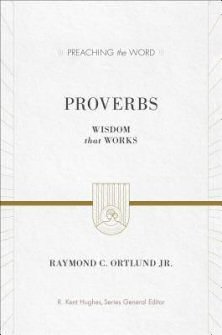

Walking the Way of the Wise: A Biblical Theology of Wisdom (Essential Studies in Biblical Theology | ESBT)
Regular price: $20.99
Related articles
- From Data to Discernment: Why AI Can’t Replace Cultivating of Wisdom
- Get Them to Call It “Wisdom Literature”: A Screwtape Letter
- 9 Commentaries on Wisdom Literature (& Why It Matters)
- What’s the Meaning of the Tree of Life in the Bible?
- 2 Trees of Eden & What They Mean: Knowledge of Good & Evil vs. Life
- Unless otherwise indicated, all Bible quotations are from the Lexham English Bible (LEB).
- Paul Scherz, Tomorrow’s Troubles: Risk, Anxiety, and Prudence in an Age of Algorithmic Governance (Georgetown University Press, 2022), 32.
- Scherz, Tomorrow’s Troubles, 32.
- See, for instance, Mark Brians, “2 Trees of Eden & What They Mean: Knowledge of Good & Evil vs. Life,” Word by Word (Logos blog), October 10, 2023. https://www.logos.com/grow/hall-tree-knowledge-good-evil/; and also James B. Jordan, Trees and Thorns: Studies in the First Four Chapters of Genesis (Athanasius Press, 2021), 58–60.
- Dietrich Bonhoeffer, Ethics, ed. Eberhard Bethge, trans. Neville Horton (Touchstone, 1955), 22.
- Scherz, Tomorrow’s Troubles, 206.


 Daniel Stegeman
 Ed Stetzer
 Steve Auld
 Chase Krug