
 Daniel Motley
“If Christianity is true, why are there so many denominations? Shouldn’t there just be one church?”
It’s common to hear skeptics both inside and outside of the church ask questions like these. If we’re honest, in our own moments of doubt we’ve wondered the same things. In our hearts we want to see a united church, a church characterized by “one Lord, one faith, one baptism (Ephesians 4:5).” Though we may firmly hold to our own theological convictions, many of us may wonder, “Are denominational divisions ultimately a good thing?”
Charles Spurgeon felt the same tension. A Baptist preacher surrounded by churches of various traditions, he wanted to make sense of all that variety. Spurgeon concluded that the church was diverse, in part, because it is still in the process of formation. Spurgeon exclaimed, “Beloved, the true church is now in the forming, and is therefore not visible. There are many churches; but as to the one church of Christ, we see it neither here nor there.” In other words, the true, universal church is invisible—it is made up of believers only, and is known to God alone according to his sovereign will. Like Spurgeon, some Christian groups have used the language of visible and invisible to clarify what they mean when they talk about the church.
Distinctive convictions, shared beliefs
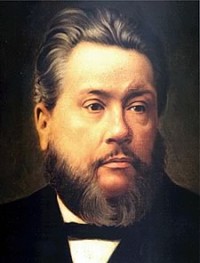 Spurgeon was a man characterized by Baptist principles. He rejected infant baptism, denied that creeds were foundational in any sense to Christian doctrine, and pastored an historic Baptist church in London. Even though he held to distinctly Baptist convictions, he understood that God had worked in various and mighty ways through different Christian groups throughout history. With celebration he exclaimed “I believe that, after all, there is more truth in this world now with all the apparent divisions of Christians by ten times than there would have been if we had been united in a nominal union into some one great church”.
Spurgeon believed that divisions in the church spring up because different Christian groups have developed firm convictions. At our best, we separate not because we hate or despise other groups, but because we want to honor Paul’s commandment in 1 Corinthians 14:40, that “all things should be done decently and in order.” When various convictions arise on the meaning and practice of the Lord’s Supper, for instance, Spurgeon and others like him would argue that it is better to divide into orderly churches than to destroy one another on account of conscience.
One of the ways that Christians can hold together the tension of desiring a united church while worshipping and serving within a particular tradition is by listening to voices in other Christian communities. Believers like Spurgeon sought to understand other traditions and find commonalities amidst the diversity: “He who lifted up Christ would have offended me had he preached some other part of his creed. Had he talked over some doctrine which I hold to be erroneous, he and I had differed, but when it comes to this, ‘He loved me and gave himself for me—he is the chiefest among ten thousand, the altogether lovely—his blood is precious’—I feel inclined to cry, ‘Brother, keep to that; praise him louder, give him all the honour.’”



 Kirk E. Miller
 Karen Engle
 David Kotter
 Mark Barnes