
 Alistair Wilson
This post is designed mainly to help students build an effective and robust bibliography for any research project they undertake. Although focused on New Testament works, it should also be useful for other readers who may wish to pursue a writing project of some kind.
Let us assume that you have been assigned the task of writing an exegetical paper on Galatians. Here is how you need to approach your bibliography:
Length
How long should a bibliography be? I am sure my students would like me to state a specific number–and they probably hope that number is a single digit! I’m not going to do that. A bibliography should be as long as necessary to demonstrate that you have investigated a subject thoroughly.
While the specific length of your bibliography will inevitably depend on the length of the assignment and the time you have available, in most cases careful research will require at least a double-digit number of sources.
Of course, there is no value in simply adding a list of books to the end of a paper if you have not engaged seriously with the content of many of them and have not even opened some of them.
Diversity
Good learners will listen to a wide range of voices, both those they expect to agree with and those they don’t. Do not restrict your bibliography to works with which you expect to agree. In fact, you may find that authors with whom you disagree strongly are most stimulating to your own thought, as they will require you to gather evidence and arguments that both show why you think a particular author is wrong and support the position you wish to take.
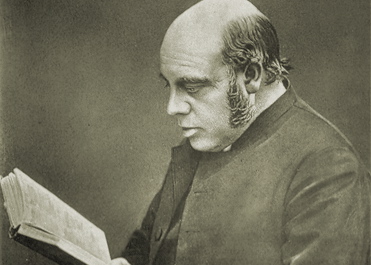 It is also helpful to include, wherever possible, the voices of both men and women, and of authors from a variety of ethnic backgrounds and geographical locations. One of my students added that there is value in considering scholarship from different periods of time. For example, the work of J. B. Lightfoot still repays careful attention. And the commentaries of John Calvin remain excellent examples of careful reading of the biblical text.
Types of material
Your bibliography should demonstrate serious research. Don’t rely on only one type of literature. There are several resources that may be helpful to you as you look for ideas. I strongly recommend that you visit the bibliographies (for both OT and NT) maintained by the Denver Journal. The NT bibliography is an excellent resource that highlights important literature in a range of different categories. Not only is this resource entirely free of charge, but it is updated regularly as new titles are published.
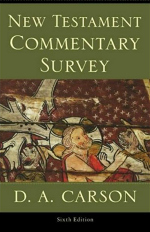 Also very useful, but inevitably somewhat dated as soon as they are published, are D. A. Carson’s New Testament Commentary Survey, and John F. Evans’s, A Guide to Biblical Commentaries and Reference Works. University students should, of course, consult their university library catalogue. If your university subscribes to the ATLA database, be sure to use that resource. Also useful are Google Scholar˛ Academia.edu, and Google Books, where you can sometimes read substantial portions of expensive academic volumes.
Ideally, your bibliography will include a good mix of the following resources:
Primary sources
Work that engages directly with primary sources will always be valued highly. It should go without saying that you will engage directly with the text of Galatians if you are writing an exegetical paper on Galatians. It is not normally necessary, however, to include Bible translations in your bibliography. You may choose to identify any translations used in a footnote or after the chapter and verse reference. If you make reference to other ancient texts, such as the Dead Sea Scrolls, Rabbinic literature or texts from the Graeco-Roman world, you should include a reference to the edition you have used in the bibliography.
Language tools
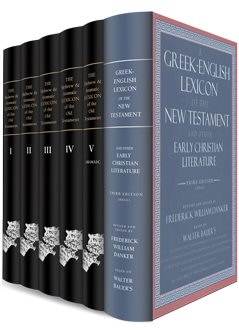 While this is essential for students working with the Greek text of the NT, students working with the English text should still use tools that enable them to consider the features of the Greek text as accurately as possible. It is good to get into the habit of making reference to the standard Greek lexicon (‘BDAG‘). You should also consult, and make reference to, the recently-revised NIDNTTE, if possible, whenever you are discussing a particular Greek word. Greek students should also refer to standard grammatical works, such as BDF and Wallace.
New Testament Introductions
Single-volume introductions to the NT can provide useful discussion of general issues relating to a biblical document. Particularly strong are the works written by Brown, Carson and Moo, deSilva and Köstenberger et al. Don’t forget these important books as you develop your bibliography.
Dictionary articles
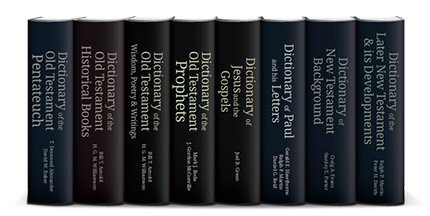
Dictionary articles can be an excellent means of getting a relatively brief orientation to the basic information and contours of discussion relating to a particular topic. The IVP Bible Dictionaries series is particularly important for biblical studies. The Anchor Yale Bible Dictionary is a standard multi-volume dictionary that reflects mainstream scholarship.
Commentaries
The most important thing about your choice of commentaries is to ensure that you use several detailed ‘exegetical’ commentaries. Commentaries that focus on the history of interpretation, theological interpretation, or practical application all have their own valid role, but you should rely mainly on careful exegetical studies of the details of the biblical text.
 The Denver Journal bibliography provides a list of the major series in English and good lists of commentaries of various levels of technicality. Some recent examples of significant commentaries on Galatians are those by Schreiner, Moo, Das, Oakes and de Boer.
Monographs
A ‘monograph’ is a detailed study of a specific topic. For example, if you are working on a study of the opening verses of Galatians 1, you might wish to consult Jeffrey A. D. Weima’s recent book entitled, Paul the Ancient Letter Writer. Have a look at this blog post, identifying five important recent monographs on Galatians.
Journal articles
Students often overlook journal articles, but they are a very important element of a well-developed bibliography. Journal articles will often provide detailed discussions of issues that receives only fleeting comment in a commentary. Recently published articles may well take account of more recent literature. University students will normally be able to access to journals through their university library. Those not connected to a university may well find journal subscriptions very expensive.
An alternative source of articles is the marvellous site, biblicalstudies.org.uk. Here you will find a wide range of articles, generally published a few years ago, which are available, with appropriate permission from copyright holders, free of charge.
Articles in books
Many articles are published in edited collections, such as conference proceedings or Festschriften (a German term used to refer to collections of essays presented to a senior scholar who reaches a notable birthday). A good example of such a book is the Festschrift for Richard Longenecker entitled, Gospel in Paul, which includes several essays on ‘gospel’ in Galatians. Also relevant is the collection of essays by James Dunn entitled, The New Perspective on Paul.
Summary
If a student gathers a good range of materials from most of these categories, that will form a good bibliography. Of course, the student must still make wise choices regarding the specific items of literature chosen. And then the student must use the sources effectively and critically! But that is a topic for another post.
I strongly advise students to consult their lecturers to discuss specific questions. Most lecturers are more than happy to talk about books and articles whenever they get a chance! I certainly am!
This post was originally published on Alistair Wilson’s blog, These Things are Written, in February 2016.
Looking for more help with research? Check out the post by Andy Byers, Lecturer at Cranmer Hall, on How to do New Testament Research.


 T. Desmond Alexander
 Brent Parker
 Michael F. Bird
 Beth Stovell